Starting school is an exciting milestone for children and parents alike.At Able Allied Healthcare, we…
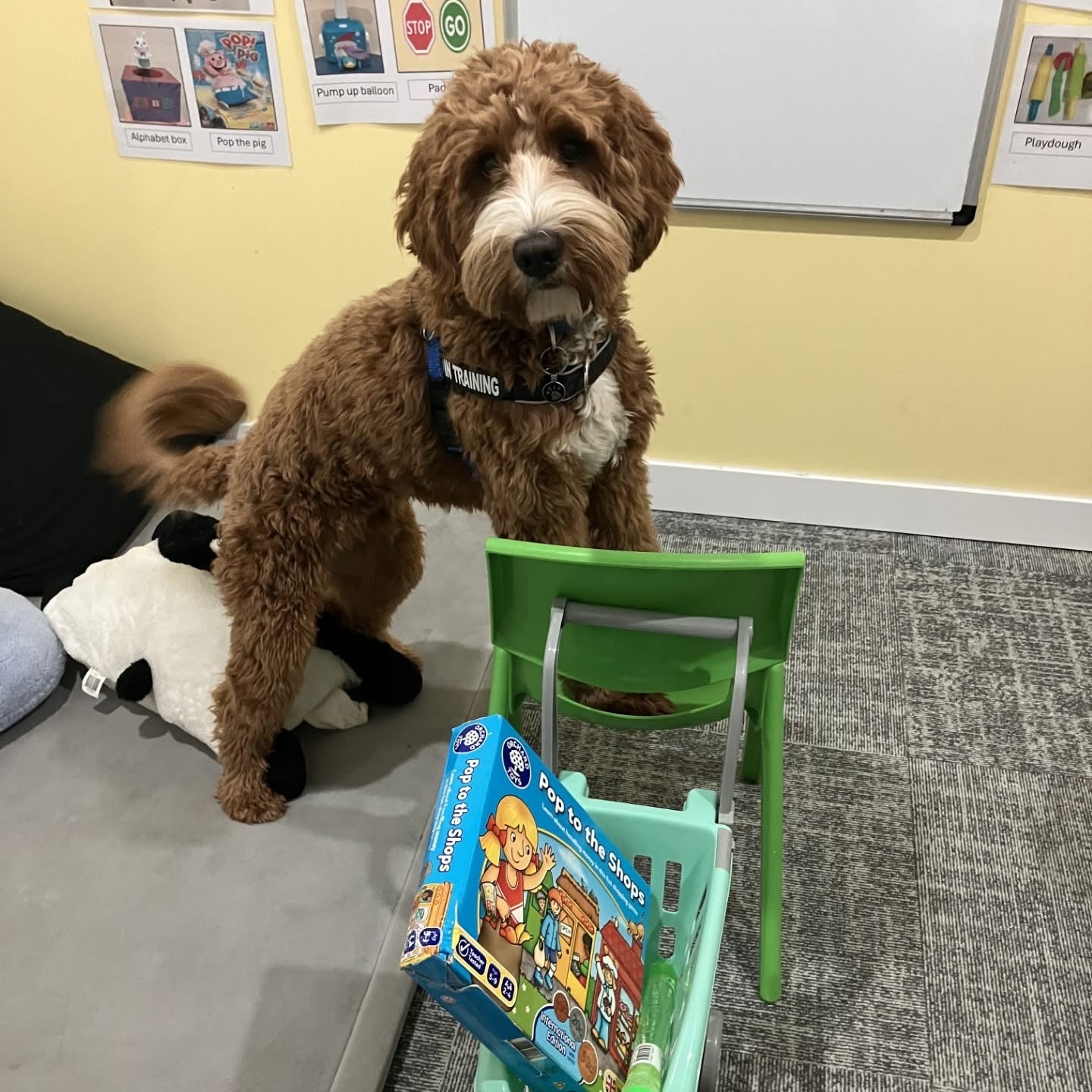
Therapy dogs in sessions: what parents need to know
Therapy dogs can help children feel calmer, more confident, and more engaged in therapy. To keep sessions safe and positive for your child and the dog, parents play an important role.
1. Consent and communication
Parents are asked to provide consent and share anything that could affect safety or comfort. This includes allergies, phobias, fear of dogs, past upsetting experiences, and any medical or developmental needs that may impact interactions. If anything changes over time, let the team know.
2. Prepare your child
Explain that the therapy dog is there to help and is a working animal, not a pet. Practise simple rules like gentle hands, an inside voice, and waiting for permission before touching.
3. Support safe behaviour
Encourage your child to follow the therapist and handler’s instructions and to respect the dog’s space and cues. If your child becomes overly excited, help them pause and regulate so the session can continue safely.
4. Attendance and supervision
Consistent attendance and arriving on time helps keep sessions predictable for your child and the dog. Follow your centre’s policies on parent involvement and observation. Children should only interact with the therapy dog under supervision unless the team has explicitly approved otherwise.
5. Health and hygiene
Handwashing before and after sessions is important. Please keep your child home if they are unwell with something contagious and dress them in practical clothing, with closed shoes often best.
6. Respect the dog and handler
Therapy dogs need breaks and calm time. Avoid bringing food, toys, or distractions unless requested, and follow any guidelines around photos or physical contact.
7. Debrief and feedback
After the session, check in with your child about what felt good and what didn’t. Share any concerns with the therapy team early so they can adjust the session if needed. Your therapist may also suggest simple goals to practise at home, like communication, confidence, or emotional regulation.
Quick recap for parents
✅ Consent provided and key info shared (allergies, phobias, fears, medical needs)
✅ Child understands gentle rules and asks before touching
✅ Child follows the therapist and handler’s instructions
✅ Supervision rules followed at all times
✅ Arrive on time and keep attendance consistent where possible
✅ Hands washed before and after, and stay home if unwell
✅ Respect the dog as a working animal (no distractions unless requested)
✅ Debrief after sessions and share feedback with the therapy team
Related Posts